About Trivance AI

The fastest way to believe is to see one person do it.

Trivance AI is education-first: we teach owners and operators to think about the change, build with it, and run what they build. This page says where that came from, and shows the machine it runs on.

Founded July 2025Run daily since

For a few years now, the people selling AI to businesses have been selling a black box. Hire an AI employee, they said. Buy our orchestration. The demos were good. What they rarely showed was the Tuesday: what the owner actually does with the thing the week after the contract is signed.

Owners are not stupid and they were not stubborn. They nodded, signed nothing, and went back to work, because nobody could answer the one question that mattered: where do I fit in this? The technology was never the problem. The gap was that they could not see themselves in it.

In July 2025, Trivance AI started from the opposite direction. Before selling anything, one person built the thing: a harness of specialist agents working through a chat workspace on a single machine at home. Not a demo. The operation itself, running daily, breaking, and getting fixed. Then came the second move, which is the whole company: teach what you learned. Build it yourself. Run it yourself. Teach what you learned.

Kyle Fonger did the building first, and he still runs the machine every day. But this page is not his resume, and the company is not about him. It is about a claim that has to survive contact with reality: the tools that used to be locked inside AI companies now sit on one small server in a house, and the person running them is not a programmer, not a team, and not a vendor. The same architecture is available to any owner who wants it. Trivance exists to make that true for you the way it became true for one person first. The essay, the playbook, the workshop, and the subscription each carry a piece of that: the essay is the argument, the playbook is the method, the workshop is the practice, and the subscription is the daily habit of thinking like an operator.

What Trivance is now is simple to say: an education-first company that teaches owners and operators to think, build, and run. Where it came from matters because the order of events is the proof. Nobody here is asking you to buy a black box. We are showing you a machine that one person built and runs, and teaching you to build your own.
How Trivance runs

The same architecture we teach is the one running this company.

A Director and five specialists share one chat workspace on one ARM board at home. Each profile keeps its own memory, its own skills, and its own keys. A cron schedule does the daily rounds: the counts below are run daily, not staged.

  • Director Receives the work, breaks it down, and dispatches it to the council below. Then it checks what comes back: nothing ships on a self-report.
  • Research Gathers evidence, scans markets and competitors, and reads the landscape before a claim goes public.
  • Development Builds the apps, the scripts, and the firmware, then deploys what ships.
  • Design Draws the art, sets the type, and keeps the UI and the brand coherent on every surface.
  • Operations Runs the revenue pipelines, the product syncs, and the dashboards that say where the money is.
  • Content Writes the essays, the listings, and the posts in the house voice, on the schedule.
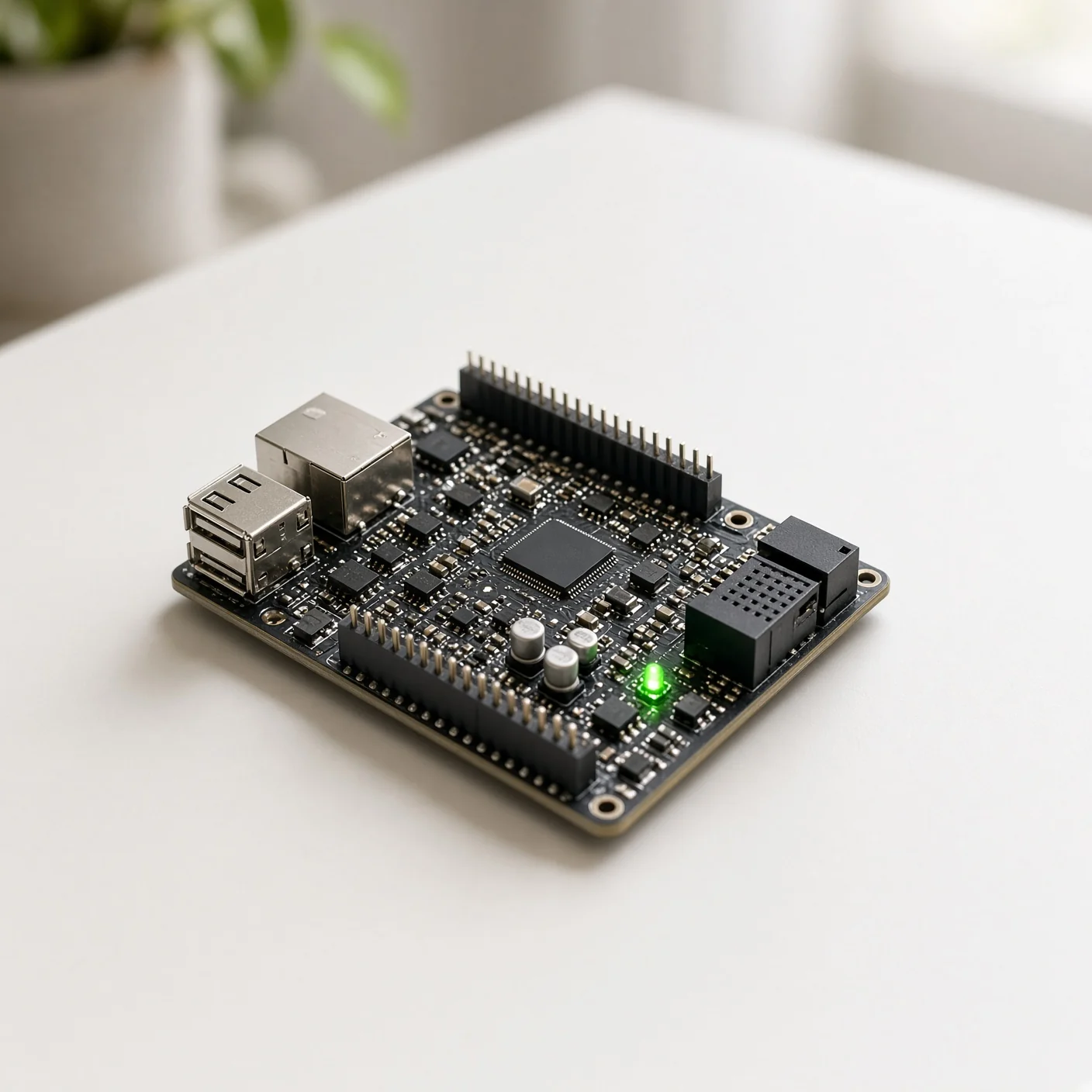
The Trivance homelab: one ARM board on a desk with a single green LED lit
The machine this page is published from. One ARM board, one green LED.

The operation, counted

These are the numbers we will defend in writing. Defending them is the point.

6
profiles on the council
39
scheduled jobs
1
chat workspace
1
homelab

One Director and five specialists share the workspace. A cron schedule does the daily rounds, a gateway keeps the chat alive, and the whole operation runs on one small server in a house. Everything on this page is run daily, not staged for it.

What running taught us

Four lessons from running this daily.

Clear language, a picture of done, and pushback.

Building with AI came down to three habits: say what you want in relatively clear language, hold a picture of the finished thing in your head, and push back on confident answers that are wrong. The tools rot every ninety days. These three habits do not.

Exit 0 is not done.

Agents report success with total confidence, and they are often wrong. Every output that touches money or a customer gets checked by one named human. The verification gap widens as the tools improve.

Running is the job.

Building was the easy half. The machine runs daily, breaks loudly, and gets fixed on the record. Updates drop patches, gateways go down, keys expire. Build disposable and schedule the re-decide.

Teach only what you run.

Build it, run it, teach it, in that order. If you have not run it daily, you have a demo, not a lesson. The order of events is the proof.

The machine is the lesson. The essay is the argument, and the playbook is the method.

Read the essay to see the change, the playbook to act on it, or the essays to go deeper. And if you have built something internally, or tried to and stopped, that is the fastest conversation worth having.